
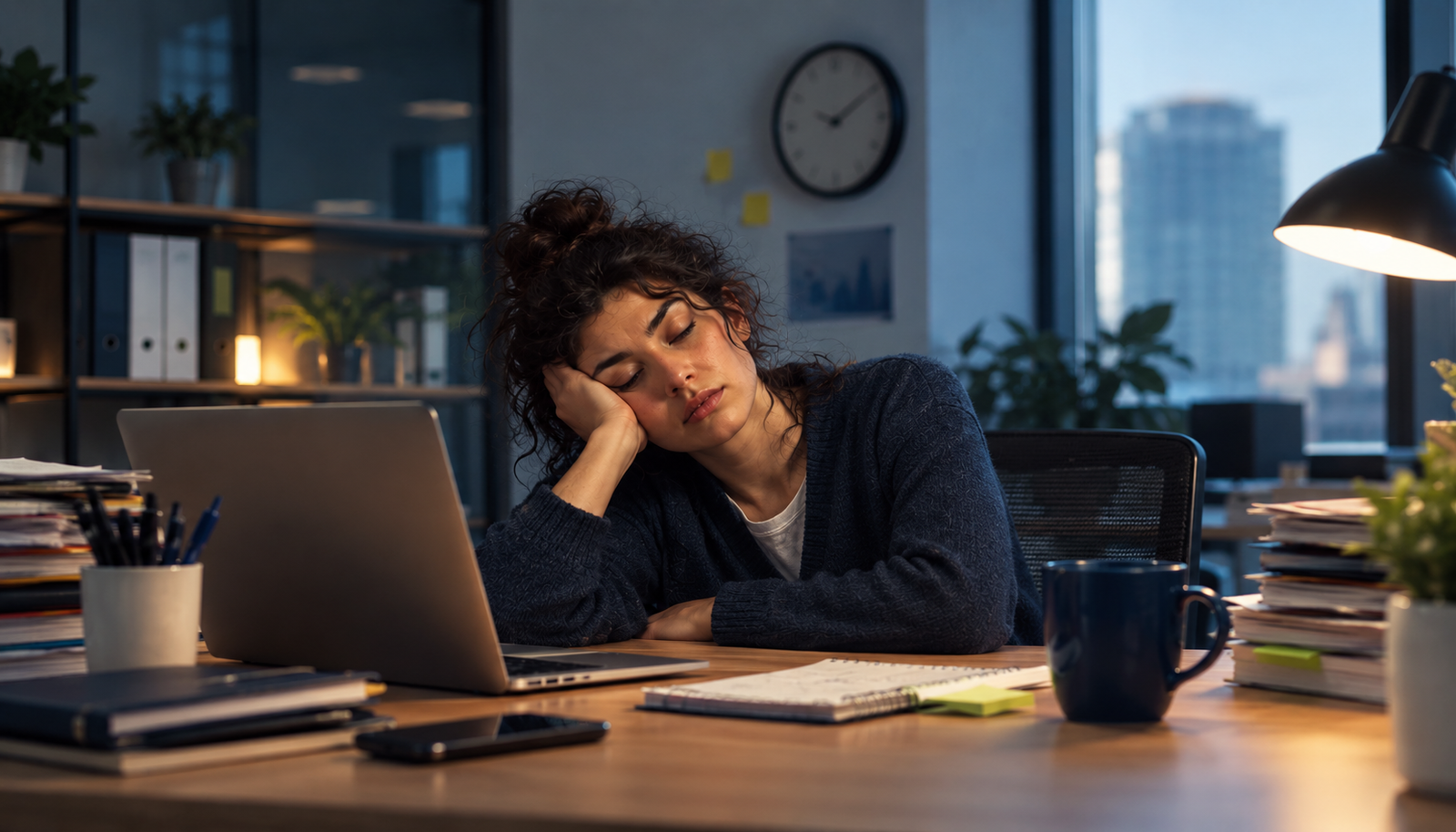

You woke up, head to work, and start yawning before the day even begins. The question comes naturally:
‘Why do I feel sleepy after 8 hours of sleep last night?’
Yes, you can still feel sleepy after eight hours of sleep. Most people assume daytime sleepiness is most probably due to sleep deprivation but sleep duration is only one part of healthy sleep. Sleep fragmentation, circadian misalignment, medications or certain other substances, medical conditions and undiagnosed sleep disorders can all contribute to daytime sleepiness.
To get closer to a conclusion, ask yourself,’ What happened in those 8 hours?’ the next time it happens rather than ‘Did I sleep enough hours?’.
Eight Hours of Sleep Doesn’t Always Mean Healthy Sleep
If you feel sleepy during the day, you might easily suppose that you need more sleep. However, sleep duration is only a part of healthy sleep.
For healthy adults, it is recommended to get at least 7 hours of sleep but the hours spend sleeping don’t reveal the complete picture. Healthy sleep also count on sleep timing, duration, regularity, quality, and absence of any medical conditions or sleep disorders.
Simply put, you can’t determine your sleep health by only counting the hours you slept. That raises a question:
What is making you feel sleepy after 8 hours of sleep?
Your Sleep May Be Fragmented
You can spend eight hours in bed without having a continuous sleep.
Sleep isn’t simply a state of dormancy when your brain completely switches off and turns on again at sunrise. Throughout the night, you go through different sleep stages. Repeated disruptions and discontinuity in sleep stages can cause sleep fragmentation and contribute to daytime sleepiness. To make things worse, the disruptions may be so brief that person might not recall it the next morning however, continued sleep fragmentation disturbs the normal sleep cycle.
So what causes sleep fragmentation you might ask. Multiple things can be the cause including:
- Repeated awakening
- Physical pain
- Alcohol or certain medications
- Uncomfortable sleeping environment
- Irregular sleep schedule
- Sleep disorders
Fragmented sleep may be the reason to daytime sleepiness but it’s not the only possible cause.
Your Body Clock May Be Misaligned
Ever thought about why you need to sleep during the night?
Circadian system is an internal timing system that helps regulate when you feel sleepy and when you feel alert during the 24-hours, while coordinating numerous other physiological processes as well. Light is one of the most important signals that helps synchronize with the external day-night cycle. So your sleep time is not only influenced by how long you’ve been awake but also by the sleep-wake cycle determined by the circadian clock.
When your sleep schedule is misaligned with the circadian rhythm, it becomes difficult to follow your desired routine. To put it another way, you might be rolling over in bed on your new bedtime and find it difficult to wake up at your set alarm. Shift in body clock can be caused by irregular schedules, shift work, jet lag, or repeated changes in sleep time.
As similar it may sound to a wall clock, your body clock can’t be fixed by moving needles. Fortunately, body clock misalignment can be fixed though daylight exposure and consistent bedtime.
You May Simply Need More Sleep
The generalization of 8-hour sleep routine has been misunderstood as a universal rule. Although, sleep experts generally recommend 7 hours of sleep on regular basis for healthy adults but everyone doesn’t necessarily have same sleep requirements. Your sleep requirements may vary from others depending upon your genetics, environment, behavior, as well as medical factors. So to speak, 8-hours sleep shouldn’t be on your to-do list that you check off every morning if you feel you need more sleep. Some healthy adults do function better on longer hours of sleep however, your daytime sleepiness doesn’t necessarily indicate that you need to sleep more.
Is Sleep Apnea Disrupting Your Sleep?
Sleep apnea is a common sleep disorder that can repeatedly disrupt sleep during the night. People suffering from obstructive sleep apnea (OSA) experience recurrent blockage in their upper-airways during sleep. The upper-airway blockage causes sleep fragmentation and contribute to daytime sleepiness. So a person with OSA may be sleeping 8-hours but might not get quality or restorative sleep.
To rule out the possibility of OSA, it would be helpful to look for related symptoms in both you and your partner. If you suspect OSA, look for symptoms such as:
- Repeated awakening
- Daytime sleepiness
- Morning headache
- Dry mouth
- Choking/ gasping for air
- Loud snoring
- Witnessed paused breathing
These symptoms may indicate OSA but not necessarily be conclude that you have sleep apnea. OSA is considered a major cause of daytime sleepiness but importantly, it can’t be considered the only possible cause.
Medications Or Substances May Be Affecting Your Sleep
Wondering if your medications might be causing daytime sleepiness?
Certain medications can cause daytime sleepiness by reducing alertness. Medication that may induce sleepiness include:
- Sedative medication
- Antihistamine
- Certain antidepressants
- Antipsychotics
- Anticonvulsants
- Some painkillers
The effects of a drug depend on the timing, dosage, susceptibility, as well as interaction with other substances. Medication is prescribed by healthcare professionals after carefully considering all these factors so if you are experiencing excessive daytime sleepiness, it is better to consult your doctor before discontinuing prescribed medication.
Do you also think alcohol helps you sleep?
Although, alcohol may make you feel sleepy initially but it considerably disrupts sleep later in night and reduce sleep quality. This might make you feel sleepy next day.
Caffeine is another popular substance under scrutiny. Coffee’s connection with sleep is an attractive research subject and here’s what we’ve been able to understand so far: caffeine is a stimulant that promotes wakefulness and its effects can stay for hours depending upon individuals. So late intake of caffeinated substances including your go-to americano can disturb sleep onset and interfere with normal sleeping pattern.
Stress, Anxiety, Or Depression May Be Affecting Your Sleep
Sleep and mental health have a bi-directional relationship; disturbed sleep can cause irritability and affect mood while psychiatric disorder can disturb sleep pattern.
Increased stress levels can make it difficult to fall asleep or stay asleep for long. Conversely, anxiety can keep the brain in a state of heightened alertness, making it harder to sleep or stay asleep. Depression can significantly affect sleep as well as daytime functioning. Depressed individuals may experience insomnia but increased sleep and excessive daytime sleepiness can also be experienced by some individuals.
Many psychiatric disorders can significantly affect sleep patterns but they aren’t the only cause to increased urge to sleep during the day. In other words, if you’re feeling sleepy while working during the day, it doesn’t necessarily mean that you are going through a psychological disorder.
A Medical Condition May Be Contributing
What if your sleep behavior is not the reason to your daytime sleepiness?
A different take on daytime sleepiness is to look for medical conditions you might be experiencing. Daytime sleepiness isn’t always caused by a sleep problem. Certain conditions can cause fatigue and sleepiness during the day, such as diabetes, thyroid problems, lack of iron, pain, etc. There can be various reasons for being sleepy, but one should consider the state of their general health rather than just sleep quality if the symptoms persist.
Key takeaway is that daytime sleepiness may instantly take your attention to the hours of sleep you had last night but it is not the only link to morning drowsiness. If repeated daytime sleepiness has been affecting your performance and routine then it would be helpful to observe your general health and may consult a doctor.
You May Have Sleep-Wake Disorder
As the name explains, sleep-wake disorders interfere with the quality, timing and amount of sleep that may contribute to daytime sleepiness.
Narcolepsy is a neurological sleep disorder that disturbs the rapid eye-movement (REM) sleep and causes irresistible urge to sleep during daytime. Daytime sleepiness however, isn’t the only symptom of narcolepsy; sudden loss of muscle control (cataplexy), sleep paralysis, and hallucinations are also characteristic symptoms of the disorder.
Another interesting sleep-wake disorder is idiopathic hypersomnia which is characterized by irresistible urge to sleep even after sufficient nighttime sleep. It also makes it harder for individuals to wake up and feel refreshed after their slumber.
Sleep-wake disorders have distinct symptoms and cause extreme daytime sleepiness however, only experiencing daytime sleepiness does not directly mean you have an a sleep-wake disorder.
Lifestyle Factors May Be Playing a Role
Before assuming that your going through a serious disorder that is hampering your routine, a better approach to your daytime sleepiness is to audit your lifestyle.
Prioritizing work may be the reason your sleep is being neglected and you’re getting insufficient sleep. Stressful situations are inevitable in life but chronic stress may be disturbing your sleep routine. Intense workload may confine you indoors and limit your daylight exposure, causing a ripple effect and disrupting normal sleep behavior. Excessive alcohol and caffeine consumption at later hours may be also be causing disrupted sleep and contribute to daytime sleepiness.
Multiple life choices negatively affect your sleep and cause drowsiness in morning.
How Do You Know If Your Sleepiness Is Excessive?
Sleepiness and fatigue. Do they sound similar? Well sleepiness and fatigue are really not the same thing. Here’s why:
Sleepiness is simply a strong physiological urge to fall asleep while fatigue actually means exhaustion, lack of energy, and reduced ability to perform mental and physical tasks but not necessarily the increased tendency to sleep. Mixing these terms may seem harmless but there distinction is clinically important. For example, a person with sleep apnea may feel sleepiness due frequently disrupted sleep but someone experiencing depression or another mental illness may complain about extreme fatigue. However, a person may experience both as well. Here is where the distinction matters: for a clear diagnosis, clinicians need to be sure whether a person is primarily experiencing exhaustion and fatigue or unintentionally falling asleep.
Epworth Sleepiness Scale (ESS) is a great way to asses your daytime sleepiness. You simply fill in the questionnaire by assessing the probability of you falling asleep in several situations. It is a highly useful assessment test to take at home but it is not considered as a standalone diagnostic test for daytime sleepiness.
How Is Persistent Sleepiness Diagnosed?
To pinpoint the real cause of excessive sleepiness, it is necessary to start with a thorough evaluation of medical and sleep history. Depending on your symptoms, clinicians may recommend specialized tests. Diagnostic evaluation may include:
- Sleep duration
- Sleep schedule
- Sleep regularity
- Nighttime Awakenings
- Snoring and breathing habits
- Occurrence of unintentional daytime sleepiness
- Medication and substance use
- Medical history
- Symptoms suggesting sleep disorders
- Blood tests if any medical condition is suspected
- Specialized tests to diagnose sleep disorders
What Can You Do About It?
Fortunately, there plenty things you can do before you end up before a doctor’s desk. If excessive sleepiness is interrupting to daily life and relationships, do a routine audit to pinpoint the reason for it.
First and foremost, make sure you are allowing yourself to sleep enough. A busy work schedule or a late-night friends meetup might be your priority right now but skipping sleep might take a toll on your health. Start keeping a sleep diary to monitor your sleep routine, it may also come handy if you need to consult a doctor later.
Adjust your environment that promotes sleep, protect your bedtime and be in bed by that time. Avoid using any devices right before your bedtime or at least minimize your blue-light exposure. If you are a heavy alcohol or caffeine consumer, reduce your intake later in the day so it affect is reduced. Interestingly, your morning routine also has a major impact on your sleep so getting morning sunlight is a great way to help synchronize your circadian rhythm and have a restful sleep.
It is highly recommended to asses your lifestyle and look for answers. Finding the right reason for sleepiness would better equip you to take right measures. If excessive sleepiness still persists after the preventative measures, consult a doctor for further diagnosis and professional verdict.
When Should You See a Doctor?
Taken preventative measures and still feeling sleepy during the day?
If excessive sleepiness is preventing you from performing your daily tasks, effecting your relationships and health and you think you have remedied things at your end, you should consider consulting a doctor for professional help. Medical evaluation is necessary if you experience:
- Sleepiness despite sufficient sleep
- Persistent or worsening daytime sleepiness
- Struggle to stay awake and perform basic tasks
- Sudden and uncontrollable sleep episodes
- Sleepiness while driving
- Unintentional slumber
- Sleepiness interfering work
- snoring and breathing loudly
- waking up choking or gasping for air
Consulting a doctor would be helpful if you are on medication and experience symptoms discussed above as well. If you are struggling to stay awake while driving, don’t continue driving. Pull over somewhere safe and seek appropriate help.
Conclusion
Eight hours of sleep merely indicate sleep duration but it doesn’t really tell you if you had a healthy sleep or it met your individual needs. Daytime sleepiness may be a cause of fragmented sleep, body clock misalignment, individual sleep needs, usage of certain medications or substances, mental health or lifestyle choices.
If occasional daytime sleepiness improves by better sleep habits, it be not be a serious concern. However, if daytime sleepiness persists and interferes especially with your daily life, it deserves attention. Reviewing your daily life is a reasonable first step and if the problem continues, visiting a sleep doctor might reveal the real cause.

[…] If you want to learn more about the potential causes of unexpected sleepiness, even if you get a “normal” amount of sleep per night, be sure to check out our article “Why Am I Still Sleepy After 8 Hours of Sleep? 9 Possible Reasons” […]
[…] importantly, a coffee nap isn’t a solution for chronic, relentless daytime sleepiness – if you’re always battling a wave of lethargy no matter how much sleep you […]
[…] some individuals, this disruption may cause one’s internal clock to shift or become desynchronized with their […]
[…] impact on your daily life. You may want to consult with a medical professional if you have a situation […]