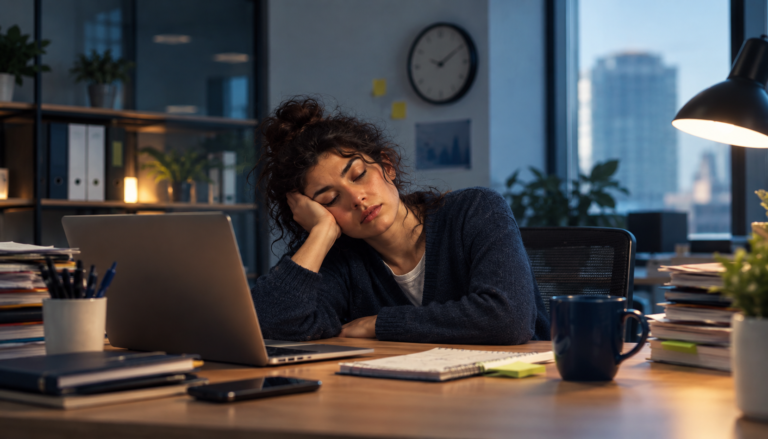

You eat lunch, walk back to your desk, open your laptop, and suddenly find it harder to keep your eyes open than they were an hour ago.
If you’ve ever found yourself asking “why do I feel sleepy after lunch?” you’re not alone.
The good news is that it’s not your lunch’s fault!
Afternoon sleepiness can be caused by various factors, including the circadian rhythm or the body clock, the increasing levels of drowsiness throughout the day, plus the mealtime consumption and the quality of sleep the previous night. An examination of the science of the sleepy feeling after lunch will be done.
What Is the Afternoon Dip?
The afternoon dip (also termed as after-lunch dip and afternoon slump) is a temporary decrease in alertness and cognitive performance. This can include:
- Increased sleepiness
- Reduced mental performance
- Decreased motivation
- Reduced reaction time
- A sudden urge to sit down (or take a nap)
For most of us, a small decrease in alertness in the afternoon is normal and healthy. However, it’s important to distinguish between normal afternoon drowsiness and excessive daytime sleepiness as a result of clinical insomnia or other disorders.
In short, while you may feel a bit sleepy after lunch, if you can’t stay awake during the day regardless of the circumstances, you may have a sleep disorder.
So, why does this happen?
Your Body Clock Has a Built-in Afternoon Slump
Your circadian rhythm is your body’s 24-hour clock. It controls when you sleep and wake, your body temperature, hormone levels, digestion, and more.
At the center of your circadian rhythm is a region of your hypothalamus called your suprachiasmatic nucleus, or SCN. Your SCN is kind of like your body’s personal time-keeper. Now, you should know that your circadian rhythm is much more than just a control of waking and sleeping. It also controls how much you’re inclined to sleep or be awake at a certain time of the day.
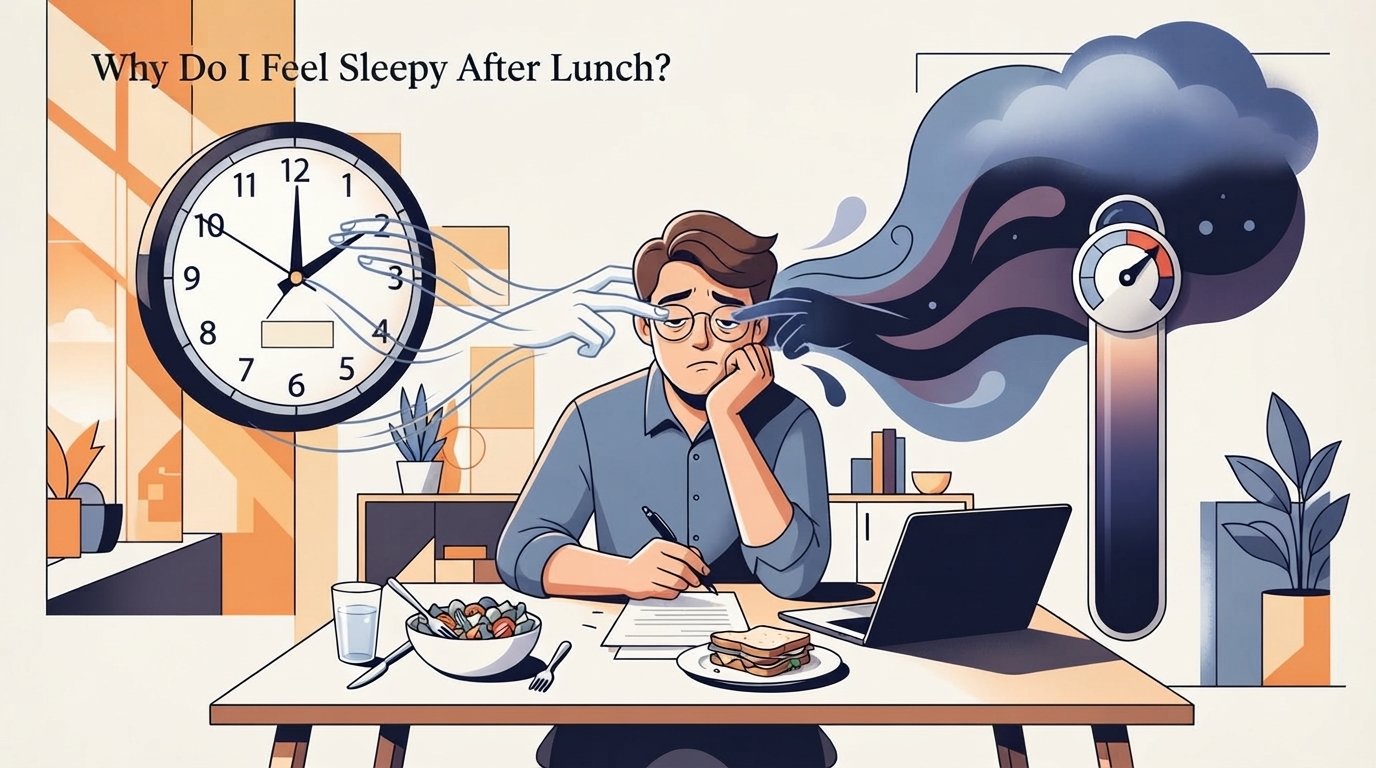
This means that at a specific point in the day (usually in the early afternoon for most people) your body’s natural circadian alerting signal may decrease in power for a brief period of time. During this period, a second process – sleep pressure – begins to rise throughout the day.
Circadian alerting ↓ + Sleep pressure ↑ = An increase in post-lunch sleepiness.
That’s the basic science behind the afternoon slump in a nutshell.
Sleep Pressure Is Building Throughout the Day
Let’s say your brain has a homeostatic “sleepiness meter” that increases in power the longer you stay awake and decreases while you sleep. This isn’t exactly how sleep pressure works, but it’s similar enough to give you an idea of the general concept.
Modern sleep science understands sleep and wakefulness to be the result of a complex interaction of circadian and homeostatic processes, rather than a single rhythm or drive.
For instance, you fall asleep when your circadian rhythm makes you feel sleepy, and your body’s need for sleep (measured in hours of potential sleep debt) is high enough.
This is why the afternoon dip is not only a gastrointestinal tale.
Does Lunch Makes You Sleepy?
Sometimes. Probably not entirely.
The consumption of nutrients can influence our sleepiness after a meal, but since the timing of the dip is related to circadian rhythms and accumulated sleep pressure, those factors play a role as well.
Researchers have noted an increase in sleepiness after meals, even when they have tried to separate meal effects from circadian influences.
These are several reasons why such a phenomenon can occur:
- The size of the lunch: A large meal can make you feel sleepy after it.
- Lunch components: Different nutritional compositions can affect our body in various ways.
- Alcohol: Consuming some drinks can cause you to become more tired, not to mention that you cannot confuse such a state with a healthy amount of rest during the night.
- Your metabolism: Each person’s metabolism is unique in terms of activity.
- The quality of your previous night’s sleep: If you had a poor night’s sleep, the feeling of tiredness during the day will be much more prominent.
The phrase “carbs make you sleepy” is not entirely accurate since there are many factors that can contribute to this condition, and research has not yet proven that any of these is a universal trigger for all individuals. For instance, a small 2024 pilot study found that there was a correlation between the changes in your eating habits and the changes in your level of wakefulness during the day after a meal. However, it was based on only ten subjects, which makes it impossible to claim that altering the diet in any particular way can eliminate the afternoon slump for everybody.
The “Food Coma”: What’s Going On?
The term “food coma” refers to the sleepy, languid feeling you get after eating.
But you’re probably not in a medical coma due to some special kind of meal. And you can stop worrying that your meal has caused all of your blood to rush down to your stomach and away from your brain.
While the theory that blood flow diverts away from the brain during digestion may have its basis in truth, there are other physiological processes that can contribute to the sleepy feelings after a meal.
In short, it’s not that simple.
The Physiology of Post Meal Sleepiness
The size of the meal you eat can play a role in how sleepy you feel after it.
Another reason you may feel sleepy after eating is that you are likely to be inactive for a while after a meal, especially if you have taken your meal at your office or another work site.
If the time and place you have chosen to eat allow little opportunity to engage in physical activity, and you are already dealing with a natural dip in alertness due to the rhythms of your circadian clock, you will be more likely to experience post meal sleepiness.
The type of food you eat can also be relevant. However, there’s no specific culprit to blame.
Some studies have shown that meals can promote sleepiness overall, but that there is no consistent difference between meals high in carbohydrates, high in fat, or a combination of the two.
So rather than a specific nutrient, it’s better to be mindful of portion size, overall diet quality and how your body reacts.
If you consume alcohol with lunchtime, sleepiness may become more prominent. Although alcohol can make you feel sleepy, it can also disrupt normal sleep later so using it as an afternoon relaxation method isn’t a good substitute for actual sleep.
What If I Feel Extremely Sleepy After Lunch Every Day?
This is when you want to look elsewhere than your lunchtime snack. If you find yourself feeling overwhelmingly sleepy during the day, possible causes might be:
- not getting enough sleep,
- poor quality or fragmented sleep,
- sleep apnea,
- having an irregular sleep schedule,
- shift work,
- problems with your circadian rhythms,
- medications that cause drowsiness,
- depression or other health conditions
Excessive daytime sleepiness can be particularly relevant in conditions such as obstructive sleep apnea, where it can occur even during the daytime.
You should consider talking to a medical professional if you find that you:
- unintentionally fall asleep during the day,
- have difficulty staying awake while driving,
- become sleepy at inappropriate times,
- need to take frequent naps,
- snore loudly or have been told that you stop breathing during sleep,
- and feel drowsy most afternoons, regardless of how much sleep you have gotten during the night.
Excessive daytime sleepiness is not always an indicator of a sleep disorder, but can be a sign that something is wrong.
Why Do I Feel Sleepy After a Full Night’s Sleep?
There are a variety of factors which could contribute to why you feel so tired during the afternoon hours, even if you had what you would consider be a full night’s sleep.
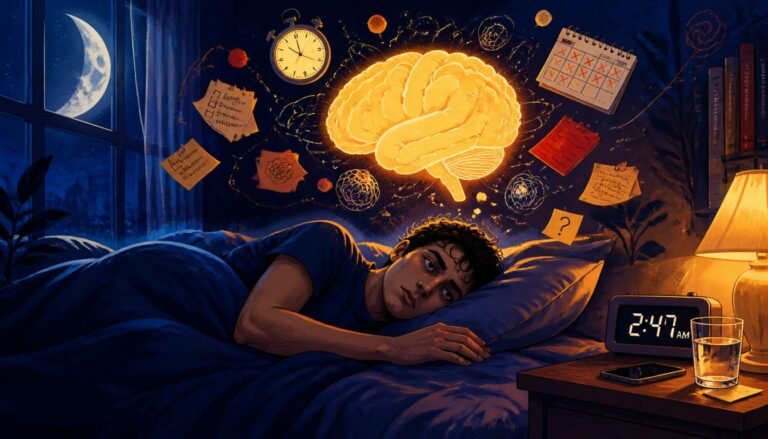
Even if you sleep for eight hours, if those hours are fragmented and you aren’t sleeping well, it might leave you to feel as if you didn’t get enough sleep at all Some of the potential causes of sleepiness after lunch include:
- Having trouble sleeping through the night
- Having sleep apnea
- Having irregular sleep schedules
- Having a circadian rhythm
- Having accumulated sleep debt
- Poorly timed meals
So if you are asking yourself “Why do I feel sleepy after lunch even though I sleep 8 hours?” you need to consider if you are getting quality sleep or not.
Afternoon Sleepiness Is Not A Character Flaw
You need to understand that your afternoon sleepiness doesn’t make you a lazy or undisciplined since alertness doesn’t stay constant throughout the day.
It ebbs and flows in all people, and has a major impact on our ability to pay attention, concentrate, react, and perform tasks efficiently. Obviously, there are external factors that contribute to sleepiness after lunch, but its important to remember that simply feeling less energetic in the afternoon doesn’t mean you are a bad employee or student. It could simply mean that your body needs a little extra help staying awake.
Why Do Some People Feel Sleepier After Lunch Than Others?
While the post-lunch dip is a universal experience for humans it does not affect everybody equally.
The most important factor that determines your level of post-lunch sleepiness is your chronotype, or whether you are a morning or evening person. You may also feel sleepier after a big meal if:
- you are older,
- don’t get enough sleep
- eat a heavy lunch
- don’t exercise
- work long hours,
- get too little light exposure,
- or are stressed
Chronic conditions and sleep disorders such as sleep apnea can also contribute to excessive daytime sleepiness after lunch.
How Can I Stop Being Sleepy After Lunch?
The good news is that there are some fairly simple things you can do to reduce afternoon sleepiness.
The #1 most important thing you can do to combat sleepiness after lunch is to make sure you get plenty of sleep at night.
If you aren’t getting enough sleep each night, you shouldn’t try to make up for it with caffeinated beverages throughout the day. In fact, studies have shown that exposure to daylight can help boost alertness and cognitive performance. If possible, spend time outside during the day, rather than working under dim interior lights.
Move after lunch. A walk can be a good way to interrupt long periods of sitting and help you feel more awake. You don’t have to do a strenuous workout, even a short stroll can help.
Don’t always eat too much. No need to eliminate a whole class of food (like all carbs), but try not to feel uncomfortably stuffed after every meal.
Limit caffeine intake. Drinking coffee or tea can give you a boost, but if you drink it too late in the day, it may keep you awake at night, leaving you tired the next day. That’s why you should probably avoid caffeine in the afternoon
Take a short nap. If you can spare the time, consider taking a short nap (around 20 minutes) in the early afternoon. Keep it relatively short and don’t nap too late if you find that it makes falling asleep at night more difficult.
So Why Do I Feel Sleepy After Lunch?
The short answer is it’s not usually just the lunch.
Your circadian rhythm, accumulated sleep pressure, meal related effects, and sleep and health context could all play a part in that familiar afternoon slump
Think of it less as your sandwich suddenly pressing a giant “sleep” button, and more like several small biological forces lining up at the same time. A mild afternoon dip is often completely normal. However, if your sleepiness after eating is severe, happens every day despite adequate sleep, or makes it difficult to stay awake during normal activities, it’s worth looking outside your lunch.
At times, the answer to “why do I get sleepy in the afternoon?” has less to do with what you ate – and more to do with how well your body can sleep and keep track of time.
Frequently Asked Questions
Why I feel sleepy after lunch everyday?
The combination of a circadian rhythm variation and sleep pressure can enhance the sense of afternoon sleepiness. A heavy meal, poor sleep, alcohol or individual variations can exacerbate this feeling.
Is it normal to feel sleepy after eating?
It is normal to feel sleepy after a meal. However, if sleepiness persists and interferes with your daily life then it should be investigated.
Why do I experience sleepiness after lunch and not dinner?
The lunch hour coincides with the natural circadian dip in wakefulness. The dinner hour, on the other hand, tends to be associated with the circadian predisposition towards late-night sleepiness.
Does eating carbs make you sleepy?
While carbohydrates can contribute towards the mechanism, it would be reductive to attribute the causative role solely to carbs. Factors like the quantity and timing of the meal, the composition of the meal and physiology-specific peculiarities also play a role.
Does a big lunch make you sleepy in the afternoon?
A big lunch can accentuate the afternoon sleepiness, but there are other reasons for this phenomenon.
Is afternoon sleepiness a sign of poor sleep?
It can be. If you have a disorder associated with poor sleep, then your afternoon sleepiness can be more severe.
Why am I sleepy after lunch even when I sleep 8 hours?
If you have a condition caused by poor sleep, daytime sleepiness can occur even when you have had hours of sleep at night.
How can I stop feeling sleepy after lunch?
Make sure you get enough sleep at night, get some daylight, do some physical exercise, do not eat very heavy meals, have judicious use of caffeine and take a nap after lunch if possible.
Is a 20 minute nap good for afternoon sleepiness?
A short nap helps reduce the sleepiness that occurs after lunch. A twenty-minute nap, provided that it is taken earlier in the afternoon, should not interfere much with your nighttime sleep.
When is afternoon sleepiness a sign of a sleep disorder?
Consult a sleep specialist if you have periodic episodes of unplanned daytime sleepiness, if you have failed various efforts to stay awake while driving, if you find it difficult to get sufficient sleep even when you have the entire night, if you have loud snoring and paused breathing during sleep or have other sleep concerns.