
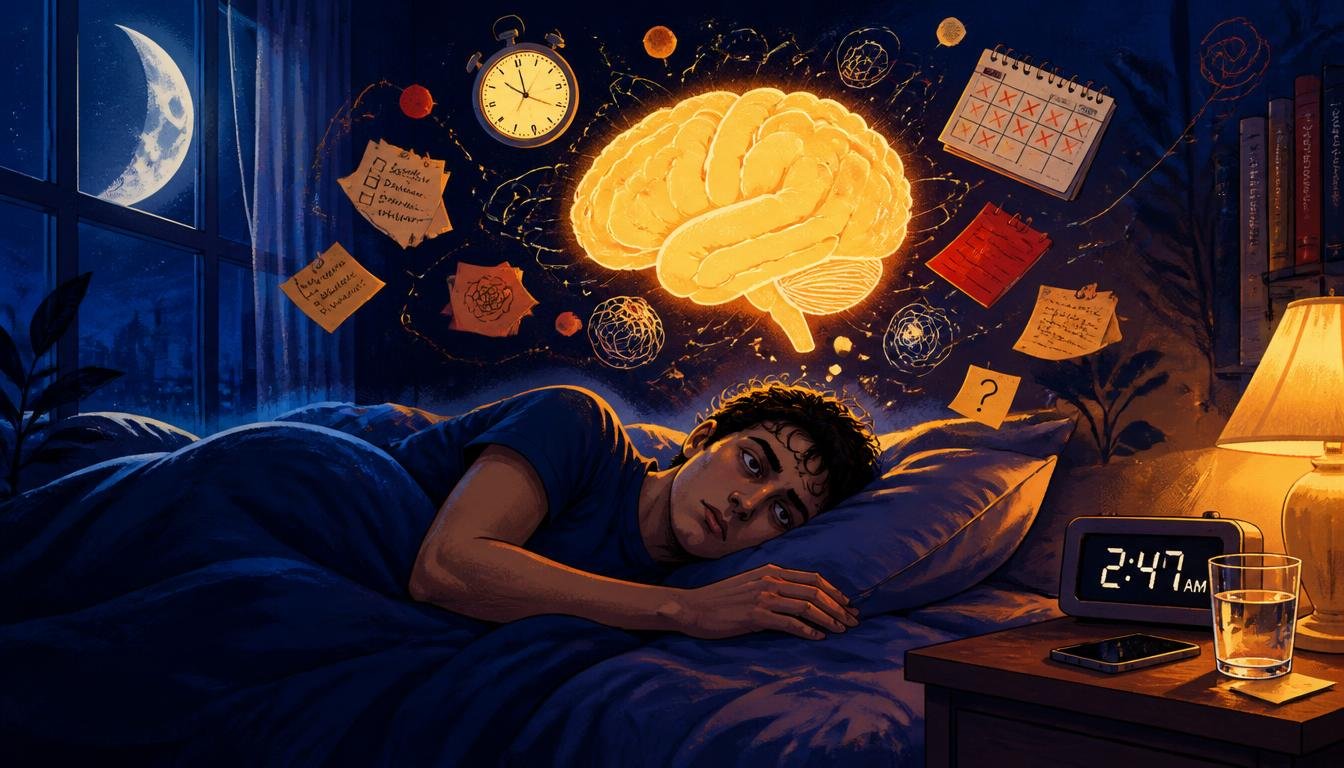

Your eyes are heavy. Your body is tired.
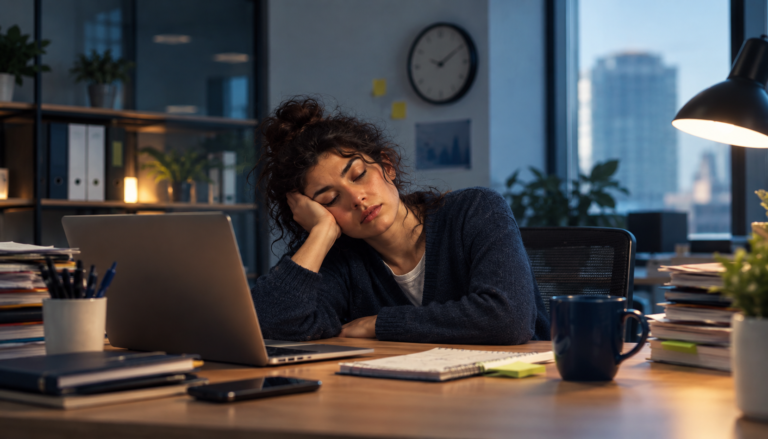
After all, you’ve been slumped in work throughout the day. You finally come to bed, but you can’t seem to get yourself to sleep
You close your eyes and prepare to fall asleep, waiting a good five, maybe ten minutes, before opening your eyes again. Your brain suddenly reminds you of the e-mail that you forgot to send and begins to think about all the things you need to accomplish the following day. You look at the clock and realize that if you do fall asleep now, you will still be able to get seven hours of precious sleep.
But somehow, that thought doesn’t make you feel the slightest bit sleepier. Now you’re just staring the ceiling and thinking ‘Why can’t I sleep even though I’m tired?’.
Sound familiar? Well, you’re not alone
Sleep is a strange phenomenon because while you might feel tired, it doesn’t necessarily mean you’re physiologically ready to fall asleep.
The reason for this is because sleep is controlled by two different processes: “sleep pressure”, which accumulates as you stay awake for longer periods of time, and your circadian rhythm; your body’s internal clock which controls your natural sleeping and waking patterns. Scientists call this the “Two-Process Model of Sleep Regulation“.
And another thing to consider is that you could be tired enough to sleep, but your brain is just too frenzied to go to sleep easily.
Let’s take a look at possible reasons.
Tired and Sleepy Aren’t Exactly the Same Thing
Here is a thought that may help explain why you can’t sleep when you feel tired.
Fatigue is not the same as sleepiness. Fatigue is the state of being tired. You know what that’s like.
On the other hand, sleepiness is your brain’s signal that it’s becoming increasingly probable that you will fall asleep soon. Both situations may or may not occur at the same time.
Take this example:
Say you work hard all day.
When you come home at 10 PM, you feel like a deflated balloon and take a nap on the couch. You can easily fall back asleep since you are already tired.
However, when you get up to brush your teeth and get ready for bed, you find yourself wide awake instead of falling asleep quickly and effortlessly as you expected to.
Or maybe you feel sleepy all day but find yourself suddenly alert when you want to sleep.
Why so?
Nothing really, except for the fact that you may have been fatigued (tired) without being sleepy at the same time. Sometimes these two states don’t coincide which can explain why you can’t sleep when you feel tired. Another way to think of it is that fatigue is “I need a break” while sleepiness is “I could actually fall asleep right now.”
Your Sleep Pressure Might Be High, but Your Biological Clock Says It Isn’t Time Yet…
Another fascinating characteristic of our sleep patterns is that your body is constantly monitoring how much time has passed since you last slept.
As soon as you fall asleep, pressure mounts within your nervous system until you are awake. This means that the longer you stay awake, the more likely you are to feel sleepy.
There is also a second mechanism within your body that helps to regulate your sleep schedules called your circadian rhythm. It’s easy to think about this as your biological clock.
Simply stated, your circadian rhythm acts as a control system to your natural sleep and wake pattern. In short, it’s how your body knows when and when not to sleep.
The combination of your circadian rhythm and your natural sleep pressure are what helps to control and regulate your sleep schedules.
That means you can be absolutely be exhausted at 10 PM while your circadian system might still tell you with relatively great confidence that it’s not yet the hour to sleep.
There are all sorts of possibilities for this.
Perhaps you’ve been slowly pushing back your bedtime, or you sleep until noon on the weekend, or you take an afternoon nap, or spend your evenings in brightly lit environments.
Jet lag and shift work can also contribute. It’s like if there was a sleepy passenger in the car who was arguing that they were not in the slightest bit sleepy.
You may have a sleep pressure, but your biology may make it challenging to actually fall asleep.
The thing is, as I explain in ‘Reset Your Body Clock: The Powerful Benefits of Morning Light‘, if your sleep schedule has drifted to a later time, it can help to learn why and how your body-clock may be contributing.
Now Your Brain Does Something Pretty Unhelpful
We’ve reached what I think is a really interesting part.
Sometimes it’s not that your brain just doesn’t want to sleep. Sometimes your brain becomes too concerned with the idea that they’re going to sleep. Researchers call this pre-sleep cognitive arousal. In layman’s terms, it means that your brain becomes pre-occupied as bedtime nears.
And this may sound surprisingly familiar:
Did I send out that email yet?
What if everything goes wrong for me tomorrow?
Why can’t I sleep?
How many hours do I have left?
I need to be asleep right now.
That last one is particularly notable.
In 2024, when looking at insomnia and hyperarousal, the authors found that hyperarousal was strongly associated with psychological aspects of insomnia while a recent network analysis identified pre-sleep cognitive arousal as a particularly notable link between insomnia symptoms and hyperarousal.
In other words, not only do activating racing thoughts keep you from falling asleep — they may, for some, actually contribute to the cycle of staying up.
And the worse you feel you are doing, the more you may be tempted to watch yourself — which brings us to the next problem:
The More You Think About Sleep, the More Alert You May Become
Once you are trying to fall asleep, you might start to obsess over whether or not you’re actually asleep.
You toss and turn and think to yourself:
Am I asleep yet?
No.
Was I asleep at all?
No.
Why won’t I just fall asleep already?
And now you’re angry.
You check the clock.
Great — it’s 1:17 a.m.
Now you’re calculating how much sleep you’re likely to get before your alarm goes off.
In a way, sleep has morphed into a performance test — and the more you think about it, the harder it can be to actually do it. Because that constant self-monitoring keeps your brain activated.
Which is why telling someone to just “relax” when it comes to sleep can be so frustrating — because the harder you have to work to relax, the less relaxed you might become.
And this is why it’s so important to disrupt this cycle of trying -> checking -> worrying -> becoming more alert -> trying harder.
Your Bed Has Been Reinforcing Your Sleeplessness
Here’s another powerful concept from the science of sleep: your brain is very good at forming associations.
If you’ve been spending hours in bed trying to fall asleep — and instead become activated and worried — your brain may associate your bed with being awake. Not asleep.
This is why stimulus control, a behavior-focused therapy used in the treatment of insomnia (often referred to as CBT-I), is so crucial.
It works to decouple the associations between your bedroom, bed, and wakefulness. Which means turning your bed into a place for sleep — not an extension of the internet, your worries, your anger, impatience or self-recrimination.
Stimulus control is actually listed in the American Academy of Sleep Medicine’s standards of care for the treatment of chronic insomnia. It’s designed to weaken the associations between your bed and wakefulness, and strengthen the associations between your bed and sleep. So if you spend hours tossing and turning in bed trying to get to sleep, your brain is not being mean or spiteful.
It could just have a different association than the one you intend it to have. It could have learned that the bed is a place where it lies awake. Learned associations can be unlearned, though.
Maybe You are Trying to Sleep at the Wrong Time of Night
Let’s go back to your biological clock.
Let’s say that you are the type of person who feels sleepy at 1 AM. But you have decided that you need to go to bed at 10:30.
You crawl into bed and do the math.
Your body says, “Why are we even here?”
You stare into the darkness.
Nothing happens.
You blame insomnia.
But maybe you should blame the timing.
If you have trouble falling asleep at a conventional hour, but not when you go to bed much later, it’s called delayed sleep-wake phase disorder.
People who suffer from it often have trouble sleeping when they have to get up for school or work, unless they can stay up until a much later hour.
Someone who can’t fall asleep at 11:00 p.m. but sleeps fine from 2:00 a.m. to 10:00 a.m. has a different challenge than someone who can’t sleep under ideal conditions at all.
Your Bedtime Preferences Don’t Dictate Your Biological Bedtime
Factors that could push your bedtime to a later hour include:
- late habitual bedtimes
- big differences between weekend and weekday schedules
- long or late-afternoon naps
- exposure to bright lights in the evening
- jet lag
- shift work
So, in considering the question “Why can’t I sleep?” it’s also worth asking “Am I trying to sleep at a time my body wants to sleep?”
The Usual Suspects: Caffeine, Naps, Light and More
Of course, sometimes there aren’t any hidden causes — the reason you can’t sleep is right in front of you.
You don’t need a 37-item sleep hygiene questionnaire to figure it out, either; a few broad categories are worth investigating. One obvious culprit is caffeine, which has been shown to decrease total sleep time, increase the time it takes to fall asleep, and cause wakefulness during the night.
A 2023 systematic review and meta-analysis of 24 studies discovered that caffeine intake influenced sleep patterns noticeably, and the key factors being the dosage and timing.
Late naps: Deep sleep is significantly effected if you take a long nap later in the day as it reduces sleep pressure and make it harder to fall asleep when the bedtime comes.
Evening light: Light is strongest cue for the circadian rhythm to determine the time of day and consequently the time you are supposed to sleep. Studies prove that evening and night exposure effect the circadian rhythm that in turn, influences melatonin levels in your body and your bedtime. However, light intensity, timing and type of light exposure are differentiating factors to the influence.
Alcohol: Yes, it may make you feel sleepy initially, but being sedated isn’t the same as getting stable sleep.
Nicotine: Stimulant.
The idea is not to obsess over everything that can rob you of a good night’s sleep. Think instead about asking yourself this question:
“What am I doing during the day that could possibly be contributing to tonight’s sleeplessness?”
This approach will likely be far more fruitful than watching the ceiling at 2am.
What Are The Best Sleep Remedies For Nighttime Waking?
And here’s the good stuff.
The first order of business is recognizing that you cannot force sleep.
Try changing your self-talk from
“I HAVE to fall asleep”
into
“I don’t need to force myself to sleep. I just need to do the things that encourage sleep.”
By fighting wakefulness, you may be fueling it, thanks to stress and racing thoughts.
Apply the principles of stimulus control
Evidence-based therapy for insomnia (CBT-I) doesn’t instruct patients to will themselves to sleep; it encourages them to modify their behaviors around sleep in order to improve their ability to fall asleep and stay asleep. Some helpful general rules for improving sleep include:
Going to bed only when sleepy (not when the clock says it’s bedtime)
Getting out of bed if you find yourself lying awake for an extended period of time and unable to fall asleep, doing something relaxing and non-stimulating in a different room until you feel sleepy again
Having a reasonably consistent wake-up time (ideally within a 1 hour window) every day
Avoiding work or screens in bed, or trying to do stimulating or worrying tasks in bed, as much as possible
Avoid making sleep a competitive event. Watching the clock and calculating how much time you have left before you need to wake up can actually increase pressure to fall asleep.
Notice that there is no mention of a stop-watch.
You may have heard that you should get out of bed and do something relaxing after 15 or 20 minutes if you can’t fall asleep.
You don’t need a stop-watch to do that.
In fact, it’s a good idea to avoid stop-watches in bed, as they can fuel sleep anxiety. The best practices encourage individuals to recognize when they are in a state of wakefulness (rather than light sleep or falling asleep) and get up and out of bed for a brief period of time and return when sleepy again. One of the components of CBT-I, which is recommended by the American Academy of Sleep Medicine as an effective treatment for chronic insomnia, is stimulus control.
In addition, sleep hygiene measures are not always sufficient in treating chronic insomnia. The AASM defines CBT-I as an umbrella term that encompasses different therapeutic procedures aiming to alter maladaptive behaviors, cognitions, and sleep habits rather than providing general advice about sleep hygiene.
The goal is not to become perfect at sleeping. It is to stop teaching your brain that bedtime means “Lie here and struggle.”
When “I Can’t Sleep” Is Actually More Than Just a Bad Night
It’s normal for people to have trouble sleeping every once in a while.
One difficult night is not an issue, but if you find that you frequently have trouble falling asleep or staying asleep in a distressing way and it’s starting to affect your ability to function during the day, it’s a good idea to speak to a professional.
There are a number of reasons why people can’t fall or stay asleep–chronic insomnia, circadian rhythm disorders such as delayed sleep-wake phase, sleep apnea, restless legs syndrome, substances or medications, and anxiety or other medical or mental health concerns, just to name a few.
The point is that when it comes to persistent trouble sleeping, it’s not something that you should test and troubleshoot on your own. A professional can help you identify what might be causing your trouble sleeping and help you develop a treatment plan for whatever it is.
In short, when it comes to insomnia, you need to meet the problem more directly than with a sleep diary and some generic self-hackery.
Conclusion
Sometimes you can be tired and not want to sleep.
Sleep is not a binary switch that’s either on or off, so you can have conflicting signals when it comes to sleep. You might simultaneously have lots of sleep pressure but be experiencing circadian inhibition, or you might be physically tired but mentally stimulated. There’s also the problem of mental interference with the process, where you start thinking about how you can’t sleep which makes you more alert, leading you to think about how you can’t sleep, etc. So the answer to your question is, “why can’t I sleep even though I’m tired,” sometimes you can’t fall asleep even though you’re tired because your brain isn’t necessarily getting the signal to sleep yet. You shouldn’t be trying to force yourself to sleep–you need to allow your body to engage in sleep by meeting the requirements or reducing the inhibitions or distractions preventing you from naturally falling asleep.
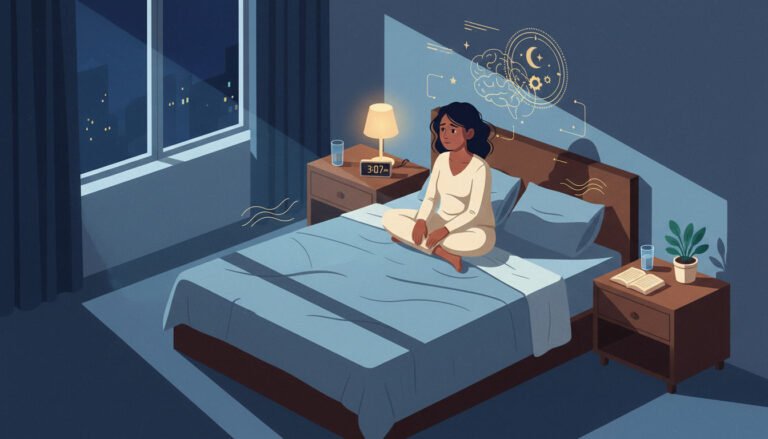
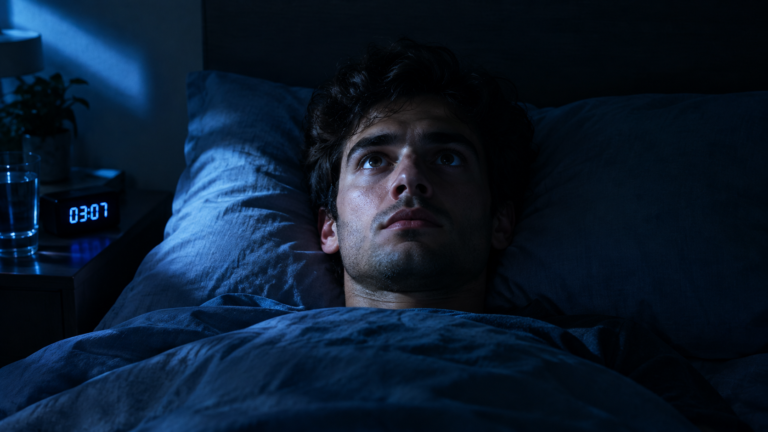

[…] After all, you have been awake for 18 hours, and you really need to get some shut-eye. However, as you lay your head on the pillow around midnight, you find that instead of falling asleep within a few minutes, you are still wide awake. […]